The town’s people of Hillton, an industrial rail town, were happy to see a bus station built near the train station. Now maybe people could go someplace. Many years ago I had a plastic two story European style Interlocking building, which I did not care for. So I cut the bottom story off making a separate building and used the upper story with lots of windows as a bus station. Everyone knows that after the trains quit hauling passengers, people had to ride the bus. I made a flat roof of thin scribed wood stock and covered it with sandpaper to look like gravel roof material. I placed several figures that I had painted inside – waiting for the bus. There were chairs and benches for seating and a stove for warmth. The interior was colored card stock (IBM card). I made the roof removable to allow visiting spectators a view of the inside. Here are some photos.
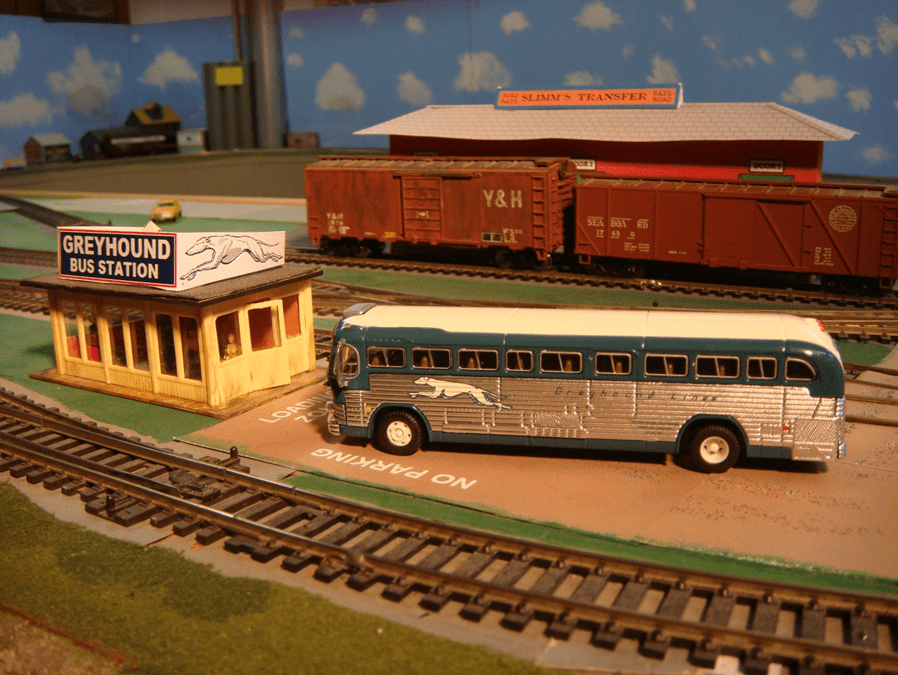
Then many years later while browsing the internet eBay one day I stumbled upon a nice Greyhound Bus Station sign. I was not interested in a 3-foot long sign but I did like the graphic of the dog and the colors. Those I captured into the computer and got busy making my own sign that would fit my over 20 year’s old bus station. It is easy to get the dog facing the other way with software. Then in 2007 Classic Metal Works announced a properly scaled 1950s era Greyhound bus.
I ordered one right away but it took about a year to get it. I was surprised that the destination sign was not above the windshield as I had expected. I was really excited working with this project, as it is lots of fun when several tricks finally fall into place for finishing your layout. Now with the painted on the pavement parking and loading zone signs made with the computer I feel pleased. I even tore the bus station apart and re assembled it to get the door on the correct side with this new layout. The scale-sized bus nearly overpowers the small parking lot that the Hillton city fathers have provided.
In the 1960’s one could travel to most any large American city on a bus. There were several cross-country bus lines; Greyhound and Trailways come to mind, there were others. They flourished as the railroads lost interest in hauling passengers.
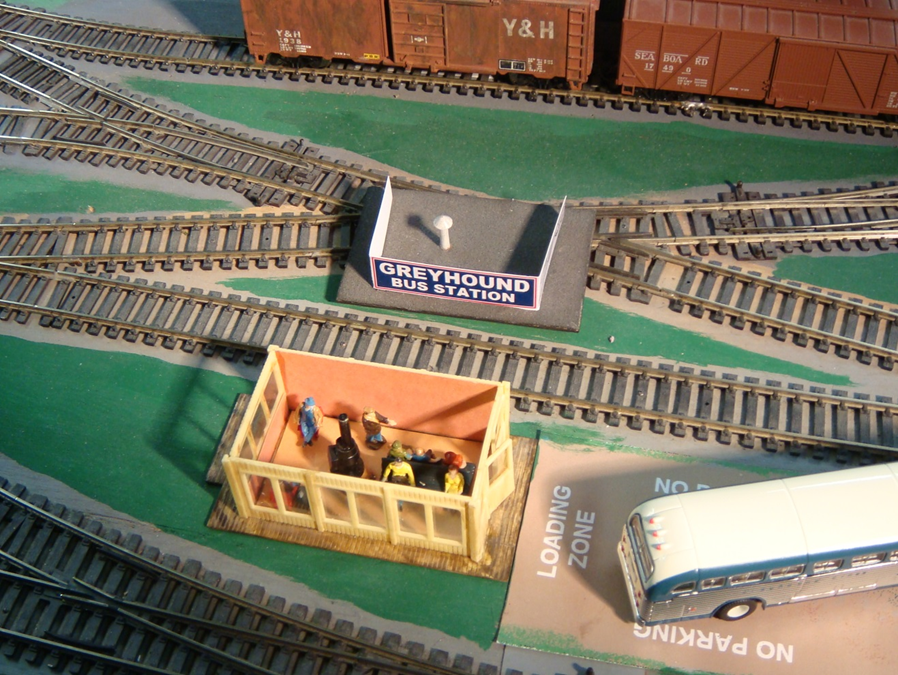
The bus station at Hillton has a new sign recently. It is one of those laser cut wood ‘thin as can be’ things from Bar Mills that is quite delicate to build. I followed the directions while building it and used the recommended colors with a pressurized spray can before assembly. I thought it would enhance my earlier sign, which was of my own hand after finding the dog and colors on the internet. The printed dog on the sides is from my earlier work. After all, I had been proud of it and felt that it was too good to part with. I re-designed the lower sign to better blend with the new large dog.
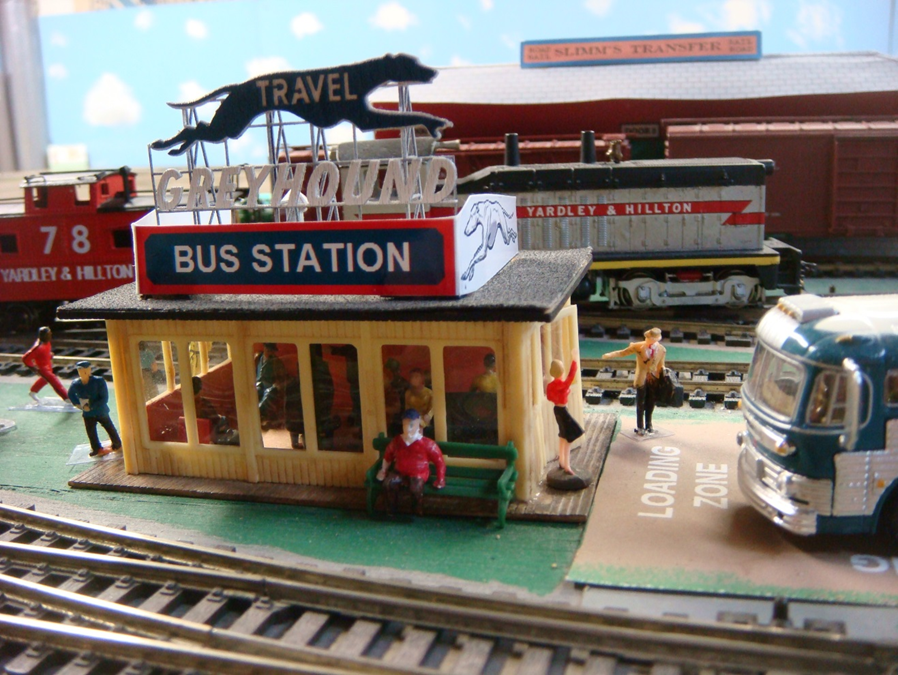
One would think that with structural members as thin as these that the manufacturer would provide a base for improved support. The white GREYHOUND letters have poor contrast to the gray framework. Maybe I should have painted the framework black. Those frame members actually measure .020 inches – quite thin and weak for wood. It is easy to accidentally break one while handling during assembly.
My bus station is right out front in the middle of the layout where it is easy to see. I am not sure that all this effort has made things look much better, but it keeps your fingers busy. It seems that the new sign overpowers the small station and the bus overpowers the location. Maybe bigger is not always better.
An interesting observation – now in the early 21st century – where have the busses gone? It seems that one does not see much of them. I wonder if they were done away with by the advent of the interstate highway system. Folks can drive themselves to far away destinations...
 Model Railroading on the Cheap
Leave a comment