I am not sure the camera will show very much of the action of un-loading bricks from a boxcar? ~ But let’s try. Bricks or concrete blocks have been hauled in boxcars for many years and still are to this day. Today we use pallets and motorized fork – lifts to load heavy bricks, stacked only about 3 or 4 feet high makes a weight limit load. Double door cars make navigating with the fork lift a lot easier. Modern heavy built box cars are used for this material, an automobile car is unsuitable for such heavy loads.
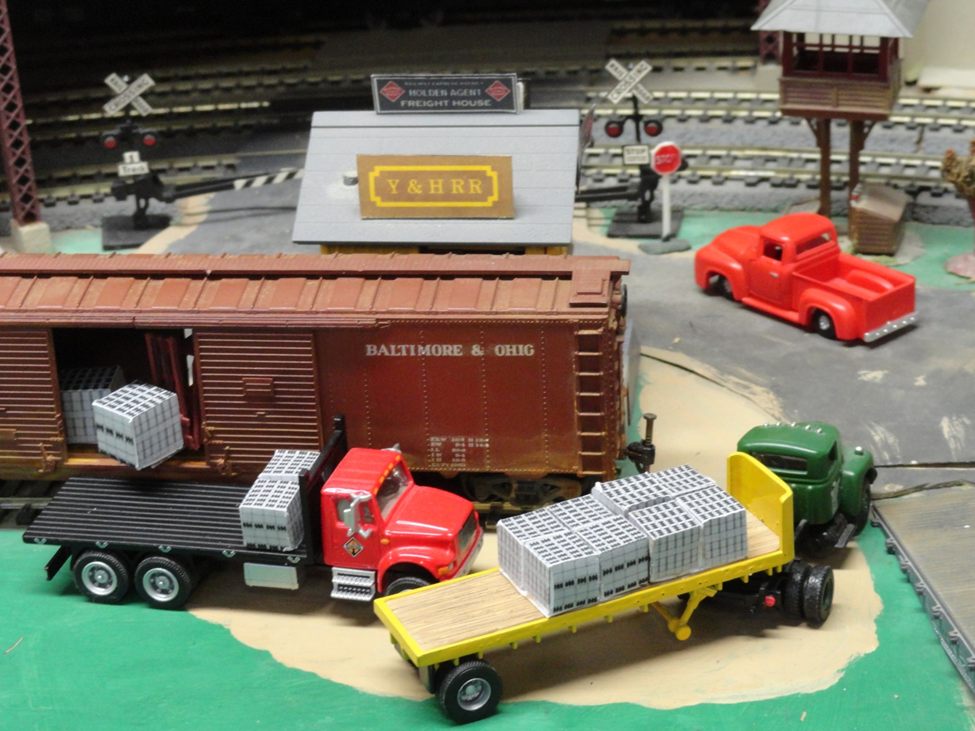
This Athearn 50 foot double door box car was a flea market find with “natural” weathering. I think it had been in a basement flood which rusted the steel weight and stained the lower plastic car sides and trucks. The yellow flatbed truck is a chopped Athearn and its green International tractor has no fifth wheel for proper hitch height (for the cameraman). The red modern International tandem axel (twin screws) is designed for heavy loads. The elevated crossing watchman’s shanty won’t be needed much longer after the automated crossing gates are here now. There are a couple more shots of this scene below.
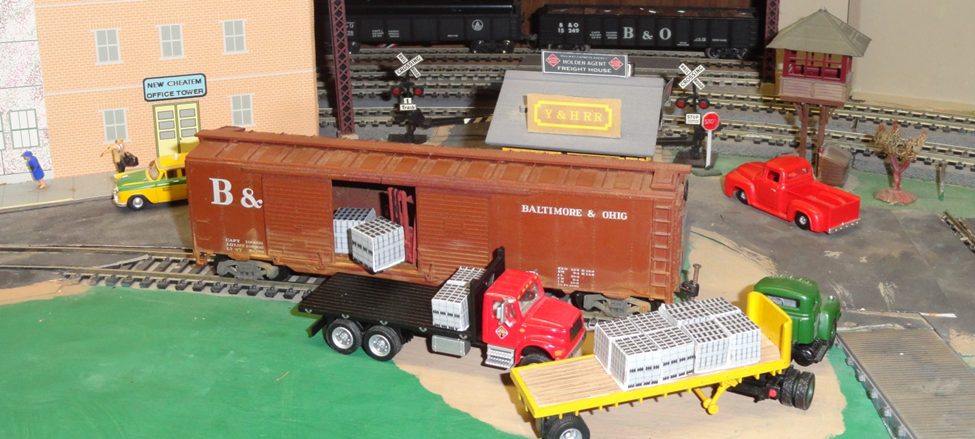
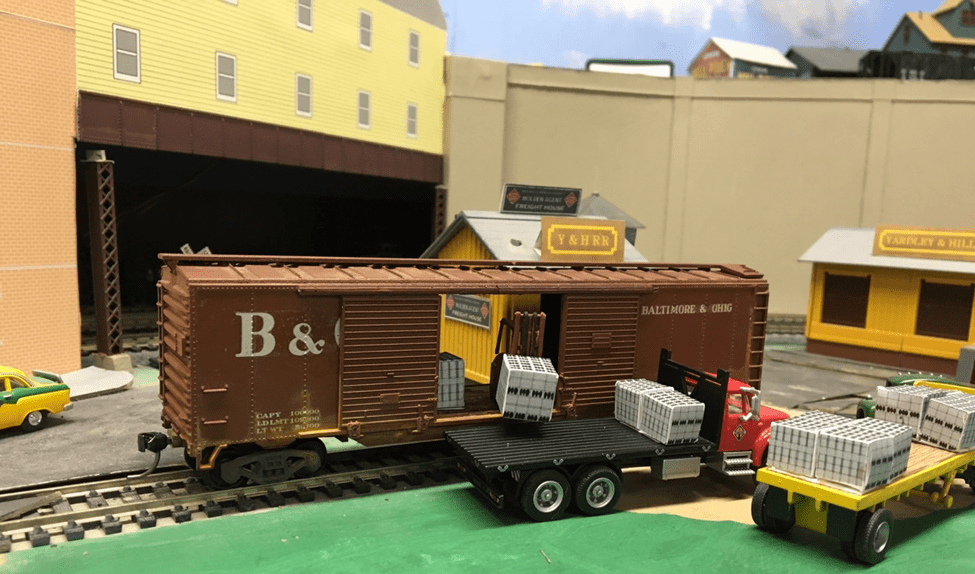
This distant scene shows a bit more of the action. The lady in the blue dress on the side walk to the left is going to the bank, there is a taxi cab at the Cheatem Office Tower, red pick-up truck is waiting to cross the main line tracks into the shadows below the steel panel bridge. I believe that a heavy load like stacked or palletized bricks would be placed in the car above the cars trucks – not wall to wall and end to end. Heavy loads in railcars are always placed over the wheels. Notice steel ingots in gondola cars, when there are just two pieces to a load, they are always placed above the wheels, this practice is easier on the car frame. And with palletized bricks or blocks it could leave a space in the center of the car for a fork lift to enter and turn around inside the car. Observations during a recent drive past the brick yard provided inspiration for this story.
 Model Railroading on the Cheap
Leave a comment